
Twice-monthly nature-based reflections for parents and educators on raising grounded teens and fostering positive culture.
A LETTER FROM THE FIELD
Pockets of refuge
Back to Earth / From the field
Abstract:
This first Field Notes entry is about refuge, and what ecologists call refugia. Refugia refers to pockets of minor ecological variation where life survives catastrophe, such as volcanic eruption, and from which life returns and reseeds the surrounding area. For us, it becomes a central metaphor for the stakes of creating spaces where young people flourish, even when the culture around them feels like a blast zone. This is the beginning of an ongoing conversation with parents and educators about how we think about culture building, why it matters, and what it takes to maintain pockets of refuge in this crazy world.
Hey there,
We live in head-shaking, double-taking, are-you-kidding-me times. Sometimes, frankly, the culture can feel like a giant blast zone.
We feel it. We don’t always know how to name it out loud. The pace, the breadth, and the intensity of this moment, its knowns and unknowns, are rattling our nervous systems in ways we can't even discern much of the time.
Young people have the least language for what’s happening, and yet the stakes are highest for them. They haven't even tasted their adult lives yet, and the infosphere is awash with cataclysmic headlines: war, climate collapse, AI doom. The future feels one way to a 60-year-old, with a lot of context, and relatively few decades to go. It feels really different to a 15-year-old, who just started paying attention to the wider world, and is now sorting out how to navigate friend groups, first crushes, and planning for a career, while simultaneously absorbing that the world and its natural systems may literally be on the verge of collapse
What can we offer young people under such circumstances?
Ecologists have a word for the pockets where life survives a catastrophe and returns: refugia. I'd like to borrow it here as a kind of cultural topos to situate Back to Earth’s work, and our vision of building good culture as pockets of refuge.
But first, a volcano.
What the mountain did
When Mount St. Helens erupted in 1980, the blast flattened forest across 150 square miles. Ten days later, scientists flew into the blast zone with no idea what they would find alive, if anything.
The thinking at the time was that life would return slowly to the mountain from the outside in, in a kind of classic forest succession story, as seeds and animals crossed back into the barrens.
What they found was rather more complex. Rather than total obliteration, they discovered that small communities of plant and even animal life had held on in little pockets of refuge: under late spring snow, around a mound of fallen logs, in underground burrows, on a few steep slopes. And over the years, these refugia, where minor variations in the initial conditions had allowed life to hang on, proved hugely consequential. They became the fertile ground where newcomers could take root, and from there, seed the open country around them.
I think it's such a beautiful metaphor for why culture building, even in the blast zone, matters.
We understand there’s a volcano. We feel its rumblings, its existential stakes. We cannot flee beyond its range. But we're not battling the volcano.
POCKETS OF REFUGE
We’re creating conditions of minor but meaningful variation. We’re organizing ourselves to maintain pockets of refuge. We're bringing people together in a certain kind of way, so that from those pockets, something precious survives, and thrives, and becomes a seed for what spreads out, for what succeeds next in this world.
Why this matters for young people
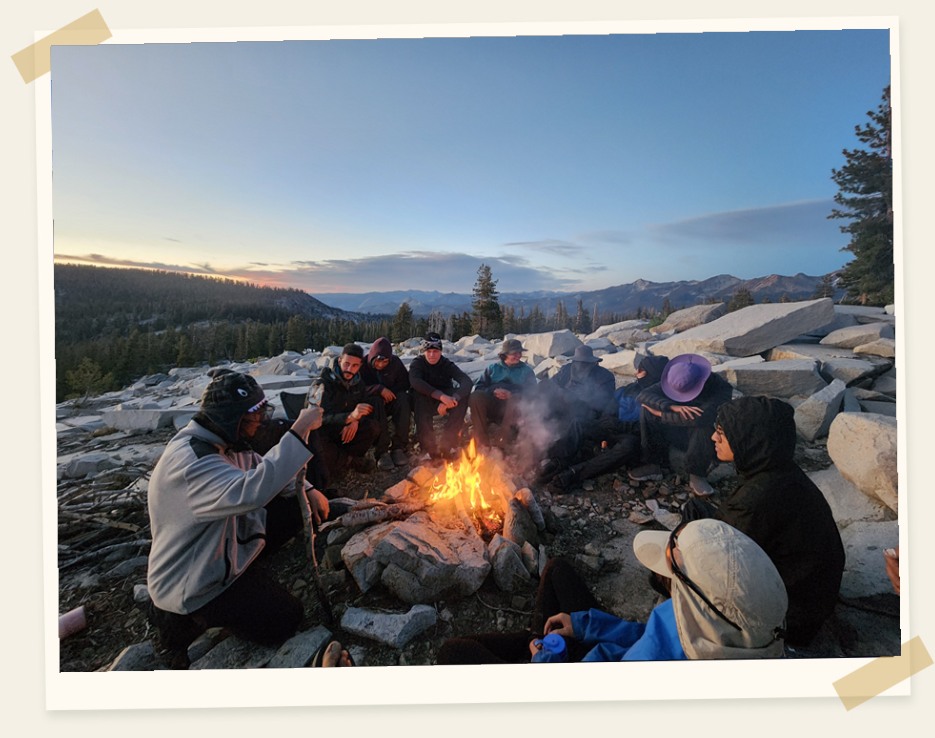
At Back to Earth, we've spent 12 years taking young men into the wilderness. And over that time, we've come to believe something simple: what boys need more of is to participate in good culture.
On our trips, that culture looks like a lot of small things. Waking up and giving thanks. Sitting in council at the end of the day. Guides who level with teenagers like they're real people. Over the years, we've discerned the pillars that hold this whole thing up: attention, honesty, gratitude, joy and wildness.
We didn't set out to develop a framework. We didn’t name those pillars and then find ways to express them in our curriculum. They announced themselves gradually, emerged out of our practice, almost without our noticing, until many years later we could look back and see them in the pattern. But the more we've put them into words, the sturdier a framework they offer.
And the more I see how sturdy they are, the more I see how helpful it is for teens to have adults around them anchored in those same sturdy values. Adults who know themselves, what they're here for, and how to tend pockets of refuge for the young people in their lives.
So yes, they need us. They need us to play this part. And at the same time, we were never meant to do this alone.
The idea that you, as a parent, should be able to give your son everything he needs, all from your own family's resources, is an unreasonable burden to carry. In fact, it’s an effect and an artifact of the very same insane culture that we’re here to build refuge from.
A NOTE TO PARENTS
You were never meant to do this alone.
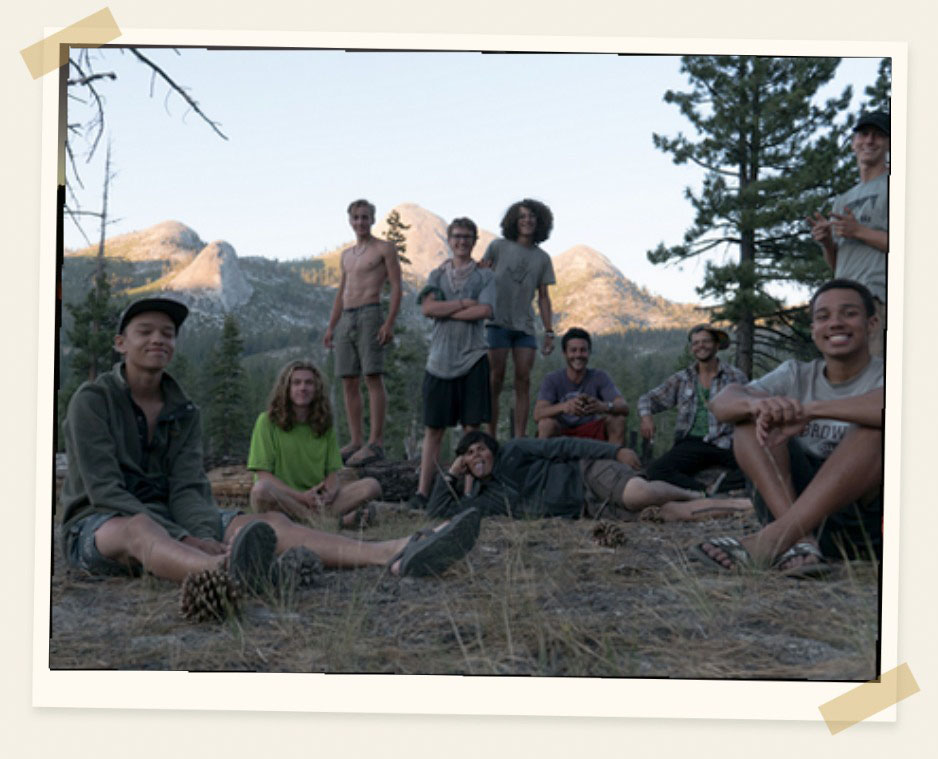
That’s why Back to Earth is here to collaborate with you to cultivate pockets of refuge, at home, in school, and in the undomesticated in betweens. Not only places of survival, but the seeds of remembering, from which future flourishing will come.
What Field Notes is
We're not here to add one more worry to your list. We're here to share what we see in the field, what we make of it, and what it might mean for your family.
What we're building here is an ecological meditation on what it takes to build culture for young adults. Through nature-based education, through metaphors and stories, we want to make a place for this conversation among parents and educators who know they don't need to do this alone.
We're numbering the entries, so if you join us later, you can always find your place in the conversation. They'll live on our website too.
Over the next few entries, we'll tell you more about what we mean by good culture, and how this whole thing started. (It began with a thanksgiving prayer I never imagined teaching.) We'll also take you behind the scenes of the work, including a school we've started working with in East Oakland.
BACK TO EARTH
FIELD CORRESPONDENCE
Where are the pockets of refuge in your son's life right now?
Where does it feel like he can step out of the blast zone and find some peace or clarity?
Hit reply and tell me. I'd love to know what the volcano looks like from your angle.
Eli
Back to Earth
P.S. You're getting Field Notes because you've connected with Back to Earth along the way. If it's not for you right now, you can unsubscribe at the bottom of this email. No hard feelings.


